
Streamhouse: How Real-Time Data Is Changing AI
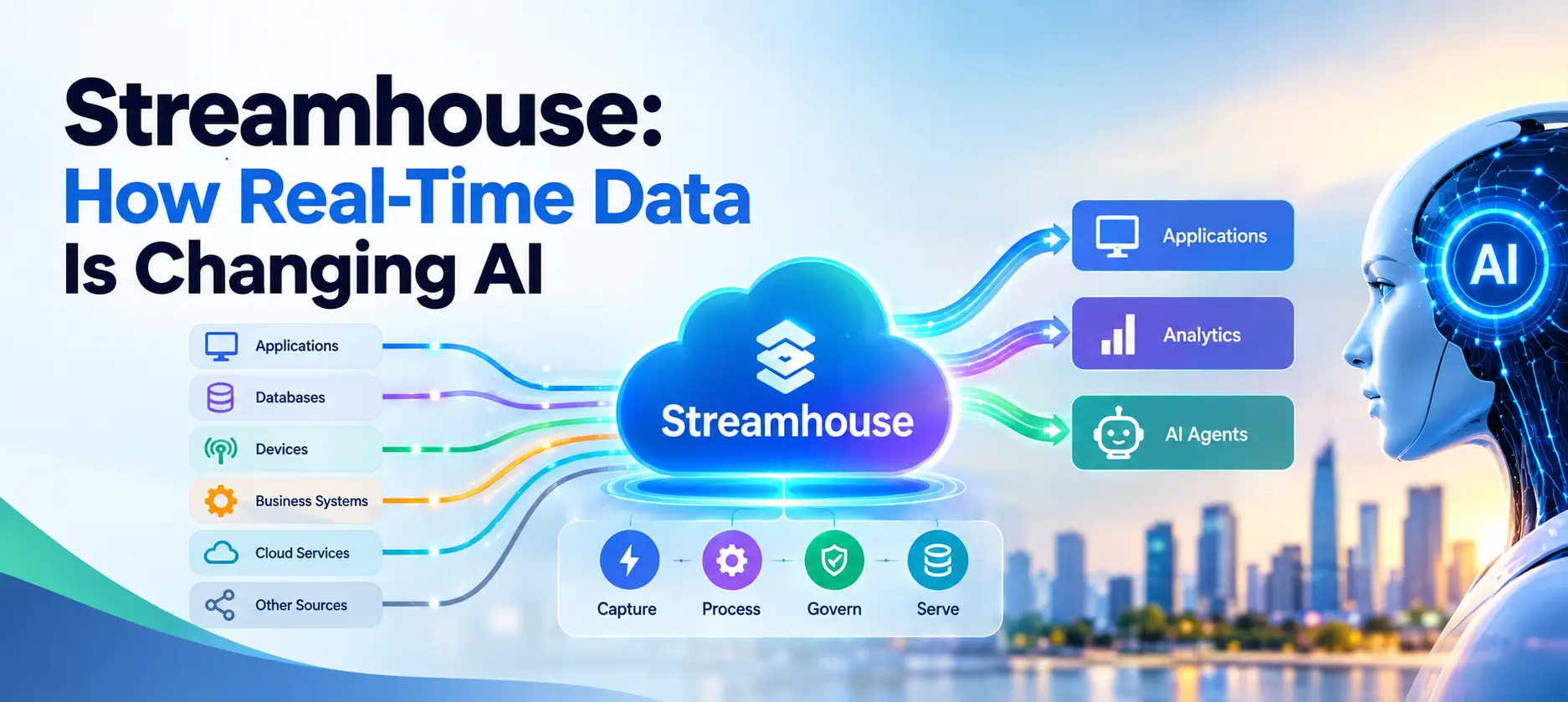
Artificial intelligence is made more usable for businesses when there is a lot of up-to-date, accurate, and available data provided. This is where Streamhouse comes in. Streamhouse is a new-generation data architecture designed to enable companies to work with real-time data for applications, analytics, and AI systems. Instead of relying only on data that is updated with a time lag, companies can use continuously updated data, potentially helping AI applications understand what is happening now. As organizations increasingly adopt real-time applications and AI agents, they need continuously updated data. Streamhouse offers one way to meet this need.
What Is Streamhouse?
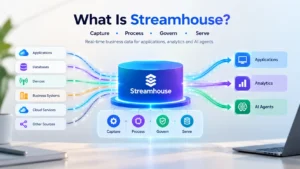 Streamhouse continuously captures, processes, governs, and serves current business data to applications, analytics systems, and AI agents. In short, it allows organizations to work with continuously updated business data rather than relying only on data collected and processed afterward. Traditionally, organizations have updated data periodically, such as every few hours or once a day. Streaming systems can process information continuously as events occur, reducing the delay associated with periodic batch processing. Streamhouse combines continuous data processing with ways to store, govern, and serve data so that applications and AI agents can use current business information. This allows organizations to work with current data rather than relying on data processed later.
Why Does AI Need Real-Time Data?
Sometimes AI systems can utilize the very latest information more effectively. Consider an AI application that tracks deliveries for a business. If you only update it once a day, for example at the end of the day, it won’t have a clue when a truck is late this morning, for example. But if it handles streaming data, it can receive live updates. The same goes for customer support, fraud detection, supply chains, cyber-security, or just about anything else, albeit in different ways. That doesn‘t mean that every AI application needs up-to-the-minute data. Many can operate effectively with relatively old information. However, in those areas where the state of play may change rapidly, having current information can make a real difference. Streamhouse helps organizations make current information available to AI applications.
How Streamhouse Works
Streamhouse’s core concept is to move data from dispersed sources to locations where organizations can store, use, and process it as events occur. These sources can include applications, databases, devices, business systems, cloud services, and other data sources. When events happen, data can be streamed and processed continuously rather than waiting for a scheduled batch process. The data can then be processed and made ready for use in analytics or AI applications. Meanwhile, organizations could also need to preserve the historical data so as to have the ability to look at previous events and spot patterns. Combining historical and current data can help AI applications understand both what has happened and what is happening now.
Streamhouse vs. Traditional Data Systems
While traditional data architectures remain valuable for many business functions, they are often limited where rapid data updates are needed. Batch-based systems may load data periodically during the day but process it later on. This system is suitable for generating reports that are not time-sensitive, but unfortunately it may not be suitable when a near real-time response is desired. Unlike batch processing, a streaming approach can reduce latency by processing business events continuously as they occur. Streamhouse embraces continuous data flows while supporting the processing, governance, serving, and use of current business data alongside historical data. The difference is not always in the technology itself, but in choosing the right approach for the right workload.
Streamhouse and AI Agents
AI agents are another area where real-time data is becoming more necessary. This is quite different from answering questions or general AI chatbots, which simply talk back to you. This is where you have something that is acting and interacting with business systems. The agent may rely on stale data whether it checks the current inventory, confirms a finished order, raises an issue, or recommends an action. An agent that relies on stale data from 2 hours ago may have previously acted on data that was stale. Being able to get up-to-date data doesn‘t make an AI agent any more powerful. Organizations may still need permissions, controls, verifications, and human oversight.
Real-World Business Uses
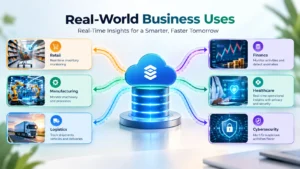 Streamhouse is applicable for many domains where organizations need insights into events as they occur. Different use cases can be envisioned in a retail domain, where organizations could monitor inventories in real time; a manufacturing domain where organizations could monitor machinery and processes; a logistics domain, where organizations could monitor shipments, vehicles, and deliveries; a financial domain, where organizations could monitor activities and identify abnormal behaviors; a healthcare domain, where organizations could have insight into constantly changing operational information with a well-designed privacy and security model protecting sensitive information; and a cybersecurity domain, where organizations could identify suspicious activities faster. These instances highlight how continuously updated data can be beneficial to applications reacting to quickly changing business dynamics. The problem is not really storing huge data, just making useful information accessible fast enough.
Why Real-Time Data Matters for AI Applications
One advantage of access to live data is diminishing the gap in AI’s response to business events, for instance, in e-commerce. However, we also have to take into consideration the vast number of products in an online shop; for example, at any time there could be a product that is not in stock. Without actual up-to-date information about stock, the AI could be working with inaccurate or outdated information. Being able to have real-time inventory data can allow the AI application to respond more quickly to events. Organizations can use similar applications in transportation, manufacturing, financial services, and customer service. Providing information in this way enables applications to react to change, rather than asking for data based on the past. Real-time data can enable an application to react to changing conditions, but data must be fast, accurate, filtered, and secure.
Challenges of Using Streamhouse
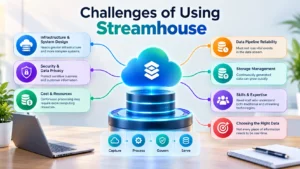 Organizations adopting real-time data solutions may encounter some difficulties, despite the benefits. When data moves in streams, organizations need greater infrastructure and more complex system designs. Companies require a dependable pipeline for streaming data that will not lose vital events. They also need to manage storage because continuously generated data can grow quickly. Security is another major concern, especially when data contains confidential business or customer information. Organizations may also need employees who understand both traditional data systems and streaming technologies. Cost can become another consideration because processing information continuously may require additional computing resources. Finally, companies must decide which data actually needs to be real-time. Making every piece of information continuously available may not be necessary. A practical strategy is to identify business processes where fresh data provides clear value and focus resources there.
Streamhouse and the Future of AI
As the number of AI agents and real-time applications grows, demand for up-to-date data will also grow. We are beginning to see AI applications that go beyond simple question-answering and link more directly into business processes. This means that AI applications that track events, leverage business data, and take actions become more sensitive to the quality and freshness of data. Streamhouse is just one form of technology that can support this new world. It combines continuous data processing with storage, allowing organizations to work with both current and historical business data. Streamhouse will not solve every AI data challenge, but it can help organizations integrate AI with modern data infrastructure.
Conclusion
Streamhouse is an example of a shift in the way businesses are thinking about data and AI. In previous scenarios, many applications could use data that arrived hours or even days after its generation. Today, many new AI applications need a constant stream of current data so they can respond to changing conditions and business events. Streamhouse addresses this use case by keeping the current state of business data continuously available through an architecture that captures, transports, transforms, governs, and serves data. This can make real-time data more available for AI applications, AI agents, and business systems, while allowing a business to consider the tradeoffs of security, reliability, cost, and data quality before committing to a real-time architecture. As businesses increasingly apply AI to support operational decision-making and automation, consistent access to data will become increasingly important for enterprises.

