
AI Healthcare: The Future of Medical Technology
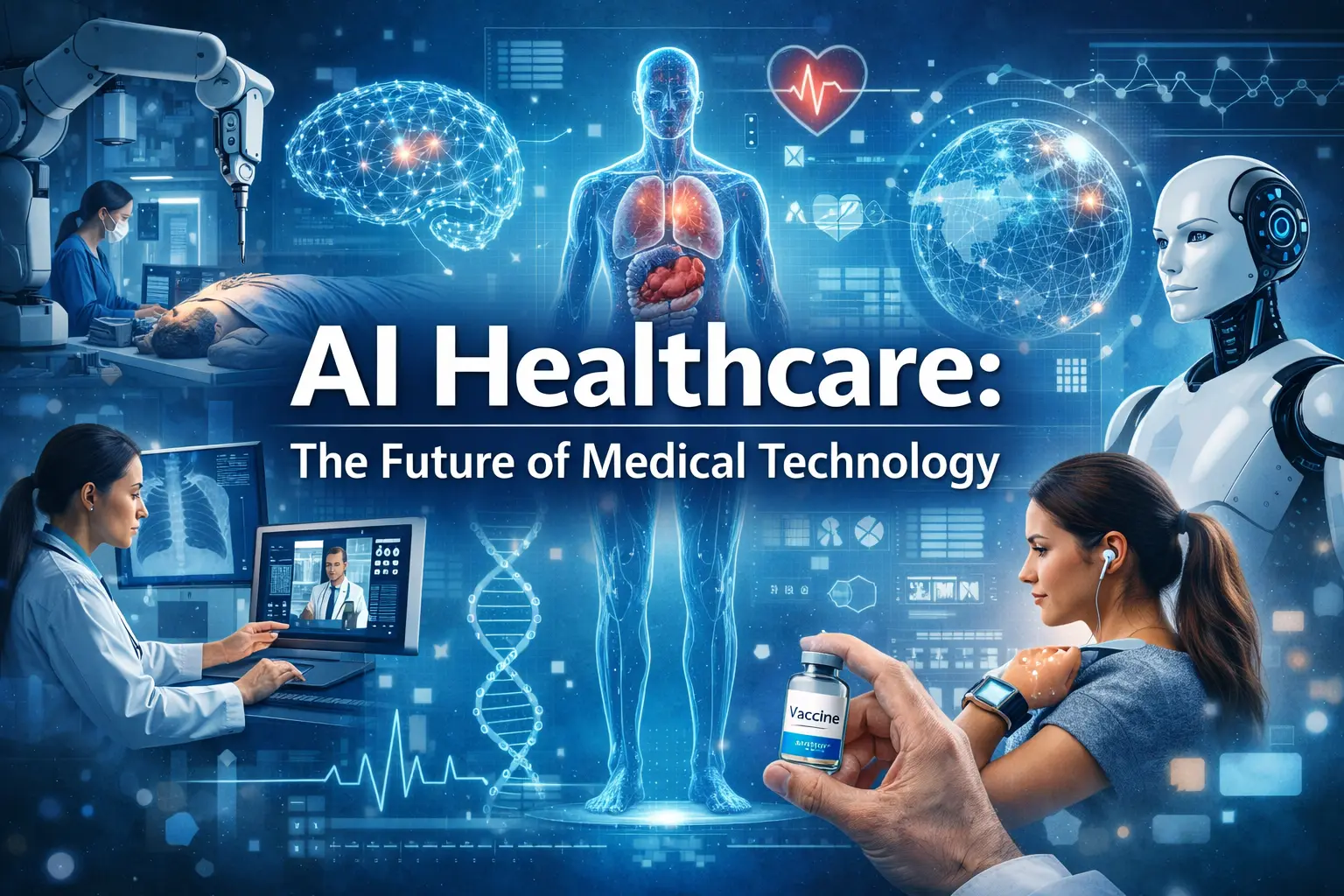
There is no doubt that the field of Artificial Intelligence (AI) is developing at an astounding rate, and that one of the key application areas is healthcare. AI is being increasingly used in hospitals, clinics, and home health-care systems in order to improve the quality of medical services delivered. By utilizing AI technology, doctors can diagnose a disease in a matter of seconds, determine the probability of possible health hazards, and provide the necessary treatment through remote monitoring. These processes create much better outcomes at hospitals and make the health service more effective. With the development of technology and AI, health services will be more available globally. This paper studies the future scope of the use of AI in healthcare, as it will be both beneficial to the healthcare system and the patient.
What is AI Healthcare and How Does It Work in Modern Medicine?
 AI in medicine is the application of intelligent technology to the medical field. Such technology studies the medical information, assists doctors in decision-making, and improves the treatment plan of the patients. The rate and speed at which AI carries out data analysis can be significantly faster than humans, which is crucial for prediction and recognizing patterns. In the example of analysing X-ray and MRI scans, AI is able to recognize anomalies that may not have been noticed even by human doctors specialising in the subject. AI helps mobile phones, web services, and wearable sensors monitor biometric data and overall health. The core intention is to improve the efficiency and outcomes of healthcare.
How AI Helps in Early Disease Detection and Diagnosis
Discovering diseases is one of the most helpful uses for AI in medicine. AI algorithms are able to sift through lab reports, medical images, and a patient’s history to find conditions that may otherwise be missed. Discovering diseases early will make them much more responsive to treatment, and in some cases could be life-saving. For example, AI can identify conditions like cancer, heart disease, or diabetes even before physical symptoms are observed. AI can scan patient records, recognizing patterns in the information that a human doctor would otherwise overlook due to the volume of information it needs to sift through (thousands of records. It improves decision-making speed and quality. It seems certain that in the following developments, AI would again be a pivotal component in both early identification and future prevention.
AI-Powered Medical Devices and Smart Health Monitoring Systems
Medical Devices using artificial intelligence will change the way healthcare is practiced. Intelligent devices and wearable gadgets will provide health monitoring. These devices can inform the patient and the doctor when there is any abnormality, such as when the blood pressure is too high, when heartbeats are irregular, etc. AI devices assist patients in performing exercises and track their rehabilitation progress. For people living in rural areas who do not have access to nearby hospitals, AI-enabled medical devices make healthcare delivery fast and efficient. It reduces frequent visits to the hospitals, thus saving time and costs for patients as well as their caregivers.
The Use of AI and Robotic Technology in Modern Surgery
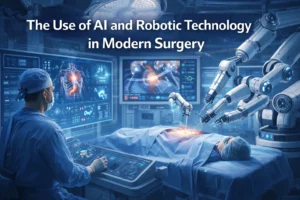 AI has also had a huge impact on operational procedures. AI robotic surgery has extremely high accuracy and eliminates the chances of errors that occur in human assistance. It assists the surgeon in difficult surgeries and produces favorable outcomes for the patient. With the help of simulation, it can foresee any danger before it takes place. This not only leads to a safer operating process but also allows the patient to recover a lot faster. Nowadays, hospitals around the world have been using this technology. It brings enhancements of saving time, decision-making, reduced surgical risks, improved accuracy, and patient satisfaction. One of the most brilliant technologies that exists in present-day medicine is AI in surgery.
How Artificial Intelligence is Transforming Drug Discovery
Another sector where the pharmaceuticals industry is undergoing changes is that of artificial intelligence. It takes many years and billions of dollars to develop new drugs, yet AI systems can sift through massive amounts of chemical compounds and predict a potential drug‘s efficacy and potential side effects, all in a fraction of that time. AI also proved critical to the incredible speed at which vaccines were developed during the pandemic. The reduction in time taken to conduct trials by virtue of being able to simulate data and analyze this very quickly reduces enormous costs and, crucially, gets a life-saving drug to market much faster. This trend will no doubt speed the search for treatment for rare and complex illnesses for the foreseeable future.
The Growing Importance of AI Chatbots in Healthcare Services
AI chatbots are no longer optional but are becoming essential for healthcare systems. The virtual assistants in these chatbots deal with simple medical questions, address concerns of patients, and schedule appointments. These chatbots provide essential assistance to physicians and staff members as they assist by taking on trivial issues. Medical chatbots can provide aid to patients dealing with mental issues by monitoring their emotional well-being and by providing ways of handling difficult situations. The use of natural language processing can enable the chatbots to hold conversations with patients using basic and simplified language. In the future, AI chatbots will become more interactive and will become more efficient. The ability to support patients from anywhere in the world, round the clock (24 hours a 7 days a week), will become attainable.
How AI Is Transforming Personalized and Precision Medicine
Artificial intelligence also makes a great contribution to personalized medicine, which is another way of opening the new era of medicine. It aims to personalize the best treatments depending on the individual according to the person‘s genetics, lifestyle, and health records. Based on analysis of the patient‘s medical records, this is bringing more efficient treatment in addition to minimizing adverse side effects. Personalised medicine assists doctors in making exact treatment plans and tracking the treatment effectiveness over time. This enables healthcare to transform from a “one size fits all” approach to an individually tailored model of medicine. An AI-driven, tailored health care will become the standard medicine in the future, providing a more efficient and user-optimized type of health care system.
Remote Monitoring and Telemedicine
 The application of AI in remote monitoring and telemedicine is developing. Nowadays, smart devices are being used by patients to monitor their blood pressure, blood glucose, blood oxygen levels, etc. AI can detect abnormalities earlier and inform the doctor. The telemedicine aspect of this system means that it can bring healthcare services to many parts of the world where healthcare hasn‘t yet reached. Patients are able to stay at home for regular checkups without frequent visits to the doctor, and this can save time and energy, and connect the doctor and the patient worldwide.
How AI Predictive Analytics is Improving Healthcare Decisions
Another key advantage of AI in healthcare is the use of predictive analytics. AI is capable of predicting issues concerning health from past data, thus allowing the hospital to make its resources readily available for the patients who may require urgent care, and minutes are crucial to assisting the patients before any adverse effect occurs. Providers may advise their clients how to prevent developing diseases such as diabetes, cardiac diseases, and so on. Governments and healthcare providers may use AI to prevent outbreaks and being able to respond rapidly to diseases. Decision makers in healthcare become more aware of healthcare.
How Artificial Intelligence Is Transforming Mental Health Care
Artificial intelligence will continue to increase in use as it can analyze mental states and conditions, provide assistance based on this analysis, and even detect depression. AI chatbots and virtual therapists can offer assistance in various ways, even to those who lack the resources or capacity to access mental healthcare professionals, including: Analysis of speech patterns, textual, and behavioral patterns can identify indicators of mental health issues. The implementation of AI in this way will allow for earlier treatment, as well as de-stigmatize mental health issues. AI will probably become central to global mental health initiatives.
Challenges of AI in Healthcare
Several barriers hinder the widespread adoption of AI in healthcare, especially concerns about confidentiality and data security of sensitive information. Further than this, AI has a great reliance on good data; just a small bit of bias can easily be modeled in the outcome. Researchers must build good models and establish clear guidelines for their use so that patients and doctors can trust them and the models can work effectively. When we overcome these challenges, AI will truly take its place in a safe and dependable system of care.
AI and the Future Workforce
Over the coming years, we shall see a significant change in staffing models in health due to artificial intelligence. Many everyday jobs will become automated by AI, which will also bring forth novel fields and professions for skilled technologists. It will help doctors work more efficiently with AI tools and collaborate with this technology. By sharing with it much of the current workload, their time can be more directed at the decision-making aspect of the role, as well as the patient communication. It will be vital that all health staff receive the necessary training, and over the next few years, artificial intelligence can supplement the physician rather than supersede.
The Global Impact of AI on Healthcare Systems
AI in healthcare is no longer only for rich countries. It is spreading all over the world, serving many people who are in need of solutions to scarce health care resources. AI applications on mobile devices, telemedicine platforms, and diagnostic tools, for example, are assisting people in reaching healthcare services in remote areas. Also, the additional utilization of more AI tools by governments and NGOs in order to manage population health, monitor the evolution of the infection, and provide the functioning of a hospital can make the health sector more affordable and more accessible.
Conclusion
AI in healthcare is growing very fast, and it‘s having remarkable effects. It has begun transforming healthcare into a more precise, affordable, and accessible field. The field of medicine is changing significantly as technology influences areas such as the early detection of disease, personalized medicine, and so forth. But the health AI still has a bright future for patients and doctors despite the challenges that need to be conquered. Application of this technology is leading to a positive impact on the level of health care provided, saved lives, and overall public health. As technology progresses, AI is the focus for medical discoveries in the future and is influencing health systems globally.

