
AI Customer Service: Why Language Is Not Enough
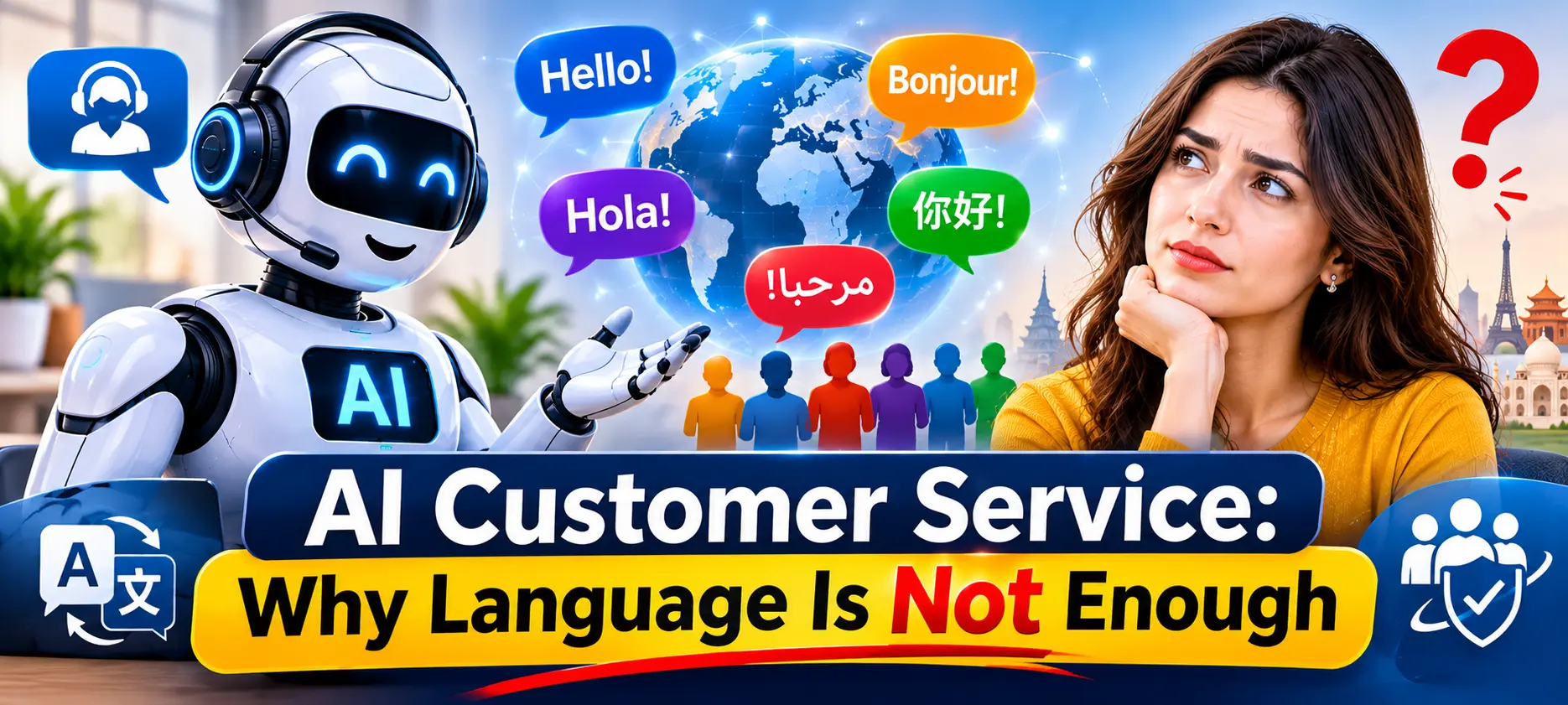
Artificial intelligence has transformed the way businesses provide customer service using AI over the past few years. Organisations are now providing instant answers, troubleshooting, verification, and data retrieval by using chatbots, voice assistants, and automated services. These systems can communicate in various languages and interact with customers from different cultural backgrounds. Speaking a language doesn’t necessarily mean being able to understand those who speak it. Customers are also from different cultural backgrounds, have different needs, value systems, and communication styles. Even if a system correctly interprets what customers say in their own languages, it may still misunderstand the meaning of their messages. This creates challenges for organisations in their multilingual customer services.
Why Language Support Matters
 Most people would want to ask their queries in a language they’re comfortable with. When using AI Translation and multilingual chatbots, you can assist your customers who do not speak your native language by, for example, answering their questions, directing them to helpful pages, describing your product, and assisting with simple tasks and troubleshooting. That would be a useful tool, whether you run an international business or a local one that caters to a multilingual clientele. You can even offer the assistance outside your business hours. But simply translating words might not always be sufficient, as some words have different meanings depending on the location. AI may struggle with slang, accents, and dialects, causing misunderstandings even when translations are correct.
Understanding Cultural Differences
Each culture has its own etiquette for seeking help and expectations about how interactions should progress. These differences can influence how customers engage with your services. For instance, there could be customers who expect things to be spelled out clearly while others may prefer a more elaborate approach to a help request. In some cultures, people expect simple pleasantries at the beginning of a call before discussing their needs, while others may consider them unnecessary. Similarly, some cultures could be more direct and loud in their complaints, while some would want to sound more polite and tactful when lodging complaints. An AI assistant that does not understand these cultural differences and applies the same approach to everyone runs the risk of sounding overly rude and blunt or excessively verbose and pompous.
Problems With Language Translation
The main customer service risk when using AI is that the technology gets your messages wrong. We’ve all encountered the problems: slang, idioms, oblique speech, and the like don’t necessarily translate. One instance could be where a user complains about a local saying which literally translates to a happy phrase in another language, and so the AI interprets the complaint as happiness. Another case could be that the user inputs a phrase which is native to their culture and the AI doesn’t understand the request as it does not know the phrase. In addition to these, the AI may interpret a user’s exasperated comment as being cheerful and respond in a way that makes them more frustrated.
The Importance of Tone
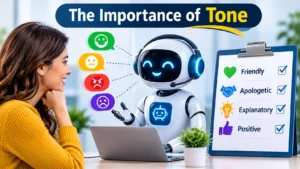 We also need to consider the element of tone. Customers will review both the data we provide and the way we present it. If a customer is just seeking some information, a calm, friendly, and polite approach would be welcomed by the customer. Whereas, if the customer is angry, too much of a patient and friendly tone could possibly sound unemotional and aloof to that customer. In the same way that languages use a formal or informal approach, or a fast food restaurant adjusts the manner of its delivery, you’ll need to identify whether the tone of the chat ought to be more apologetic or explanatory, and it can also be positive. You can use chat transcripts to check on this and draft some standard guidelines.
Local Needs and Customer Expectations
Cultural differences can affect how customers experience different stages of a service. A bot might try to present a service visually that doesn’t make sense to a customer elsewhere. It may show dates, lengths, weights, costs, and addresses in a way that someone else doesn’t comprehend. It could use local calendars to indicate what a holiday is, or to inquire about the local working hours. A payment method might be misunderstood. Even small details make it seem like your service was made for someone else. A consumer may want your offering on their special day, but the bot is considering the customer somewhere else and their unique special day. More than a translation is needed by all companies. They have to tailor particulars, the format of data, what a user wants, choices, and offerings to each locale.
AI Bias and Unfair Customer Experiences
Training the chatbot on a specific country’s language will make it expert in serving customers of that language, at the cost of alienating other customers who will speak different languages. Accents, dialects, local names and spellings may all be invisible to your chatbot. In fact, a consumer who speaks a less-common language could well be met by a shorter, less-useful response from a chatbot. This isn’t always deliberate, but the potential for discrimination is there. Often this happens because one language’s training data is bigger, better, and richer than another. Walk a mile in your customer’s bot shoes: use languages in their various forms and see how they respond. Testing your chatbot in different languages and involving customers will help businesses identify which languages need improvement.
How Businesses Can Improve AI Customer Service
 An easy way to improve the AI customer experience is to involve users in the development process. The users can provide a great deal of input in testing the bot’s responses with regard to dialect, grammar, humor, or slang, for instance. You may ask the community how the bot sounds, if it sounds polite, and if its examples or references make sense for that community. Businesses should also test different grammatical structures, dialects, and language levels. Make sure to keep your patterns, your rules, and your product data current and include your users in these updates. These users will prove valuable over time and help businesses identify problems before they lead to frustrating customer experiences.
Why Human Support Still Matters
The human element is crucial, especially for the more complex, delicate, and emotional enquiries. Automated systems cannot handle certain enquiries because they require a full understanding of the situation. It could be about a customer’s tax bill, a parcel that hasn’t arrived, or even a customer service enquiry that has a cultural element to it. Businesses should inform customers how to contact a human advisor and provide clear instructions to help them avoid repeating their enquiries to another customer service representative. Customer service agents should learn to show empathy, respect cultural differences, communicate clearly, and respond carefully. The combination of the responsiveness of the automated system with human compassion will cater for the range of unexpected enquiries.
Protecting Customer Privacy and Trust
When it comes to deploying AI in customer experience, trust and data privacy will remain significant issues. Businesses will have to ask for customer or supplier data – for example, names and addresses, order and payment details, or even chat history if they want to provide AI-assisted services. Customers will expect companies to explain what data they are collecting and for what reason; also, companies should not keep data they do not need. On the other hand, the AI used will need to be programmed to prevent one user’s data from being accessible to another. Privacy laws need to be robust in all the company’s markets, but the expectations of consumers on data may differ widely. Making data collection notices compliant with the laws in each market and keeping them brief can help build consumer confidence in AI.
The Future of Multilingual AI Support
The future of multilingual delivery will be a mix of technology and on-the-ground experience. Technology is growing in leaps and bounds right now, and will only improve over time as it learns idioms, regional dialects, and the subtle, nuanced, cultural underpinnings of words. However, organisations should not assume that future technology will meet every customer need. They should regularly evaluate its performance using independent standards, gather customer feedback, and keep humans involved in the process. Businesses need to focus on more than the language their chatbots use. They should evaluate whether the chatbot offers solutions, prevents customers from repeating the same process two or three times, and treats every customer with dignity. These metrics help chatbots identify overlooked cultural and language differences.
Conclusion
AI customer service can reach users around the world, but language support alone is not enough. Customers want to be served and not just spoken to politely. They want you to understand them and treat them with respect. “Even the smartest AI system will only succeed across different regions and markets if businesses consider cultural differences, test their systems in various markets, protect customer data, and offer live human support when needed. And don’t be afraid of feedback: address issues and look for solutions instead of treating everything as a technology issue. AI services are there to assist, not replace, and no amount of NLP can replace a thoughtful human service.

